Google’s Major Data Centre Investment in Visakhapatnam: A Deep Dive
 By Shantanu Sen Gupta
October 24, 2025
By Shantanu Sen Gupta
October 24, 2025

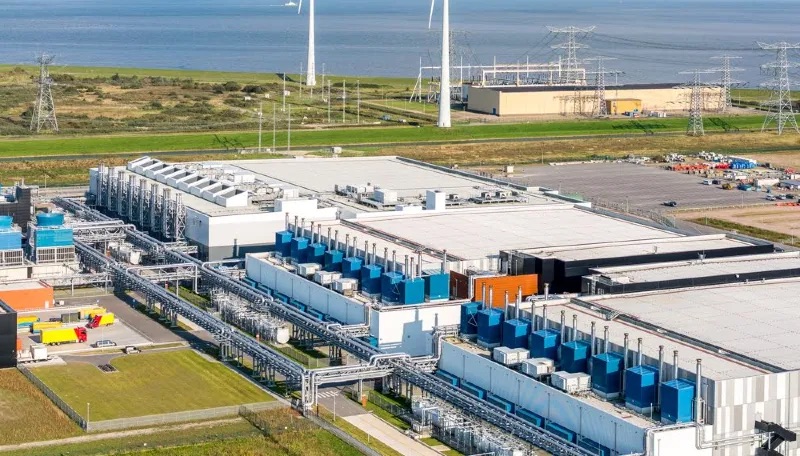
Google is set to make one of its largest infrastructure investments in India with a data centre and AI-hub project in Visakhapatnam, Andhra Pradesh. The initiative, announced in late 2025, aims to establish a gigawatt-scale data centre cluster, bolster AI infrastructure and position Visakhapatnam as a technology and innovation hub.
Key Investment Figures
The project investment is associated with around US $10 billion (≈ ₹87,520 crore) for the initial data-centre cluster. Over the broader term, the figures scale up — Google has announced a commitment of ~US $15 billion over five years for its first AI hub in India, located in Visakhapatnam. Three campus sites are identified: Tarluvada, Adavivaram and Rambilli (in the Visakhapatnam/Anakapalli region).
Capacity & Infrastructure Goals
The data-centre cluster is expected to provide around 1-gigawatt (GW) of capacity across the three campuses. Supporting infrastructure includes high-capacity submarine cable landing stations, metro fibre networks and power-connectivity upgrades. Tax and regulatory clarity has been provided by the Andhra Pradesh government, including assurances of no retrospective levies on data-processing activities.
Economic & Regional Impact
The project is expected to generate tens of thousands of jobs (direct and indirect) and add significantly to the state’s Gross State Domestic Product (GSDP). The Andhra Pradesh government describes the investment as one of the largest ever FDI (Foreign Direct Investment) commitments in the state. Visakhapatnam is being positioned by the state government as an “AI City”, aiming to become a significant global IT and data-centre hub.
Great to speak with India PM @narendramodi @OfficialINDIAai to share our plans for the first-ever Google AI hub in Visakhapatnam, a landmark development.
— Sundar Pichai (@sundarpichai) October 14, 2025
This hub combines gigawatt-scale compute capacity, a new international subsea gateway, and large-scale energy infrastructure.…
Implementation & Challenges
Land acquisition: Legal and procedural hurdles remain. For instance, the acquisition of ~200 acres at Tarluvada has been slowed down by court cases and contested claims. Resource demands: Large-scale data centres demand substantial power, cooling and connectivity infrastructure — the project includes heavy demands on local resources and energy systems. Environmental and sustainability considerations: As the facility will operate at hyperscale, regulatory oversight of energy consumption, water use and infrastructure impact will matter for local communities and long-term viability.
Strategic Significance for Google & India
For Google: The Visakhapatnam investment is part of its broader Asia-Pacific expansion and AI-infrastructure strategy. It signals trust in the Indian market and underscores Google’s aim to provide low-latency services and scale AI capability in the region. For India & Andhra Pradesh: The project aligns with technology-growth ambitions, digital-economy targets and regional development plans. It may attract further investment, create an ecosystem of supporting industries and boost infrastructure. The project also highlights how India is competing globally for data-centre investment, aligning with national policy emphasis on digital infrastructure, green energy and AI readiness.
What It Means for Stakeholders
Local workforce & industry: Opportunities in construction, operations, logistics and supporting services are expected, though full‐scale technology jobs may ramp more gradually. Infrastructure & ecosystem: The project will bring enhancements in fibre-networks, connectivity and energy infrastructure — potentially benefiting other industries and businesses in the region. Policy & regulation: The state’s proactive role (tax clarity, land / power allotment, regulatory support) will be key to timely rollout and long-term sustainability. Environmental impact: Given resource intensity of data centres, local planning must address cooling, energy efficiency, water usage and ecosystem preservation.
Timeline & Next Steps
The formal investment approval and MoU signing is expected (or has been announced) in October 2025, with construction and phased rollout targeted by around 2028.
Further clearances (environmental, land, power-grid) and infrastructure build-out will govern pace of implementation.
Monitoring of job generation, ecosystem development and regional impact will be key as the project moves from concept to operation.
Conclusion
Google’s Visakhapatnam data-centre and AI hub investment marks a significant milestone — not only for the region of Andhra Pradesh but also for India’s position in global digital infrastructure. If implemented effectively, the project could accelerate high-capacity computing, AI innovation and economic development in the region.
For stakeholders — from policymakers to businesses to local communities — careful alignment of infrastructure, workforce readiness and environmental safeguards will determine how transformative the investment is. For Google, this is more than a data hall—it is a strategic commitment to infrastructure, localisation and digital growth.