Microsoft Draws Line on AI Erotica While Rift with OpenAI Widens
 By Sumit Sahu
October 25, 2025
By Sumit Sahu
October 25, 2025

Background
Microsoft’s partnership with OpenAI has long been a pillar of the generative-AI ecosystem: Microsoft provides cloud infrastructure (Azure) and significant funding, while OpenAI supplies advanced models and API services. However, recent developments point to growing strategic and philosophical differences between the two organisations.
The Announcement
At the Paley International Council Summit in Menlo Park (October 2025), Microsoft’s AI chief Mustafa Suleyman made a clear declaration:
“That’s just not a service we’re going to provide.”
He was referring to simulated erotica or adult-intimate-AI companion services. Microsoft is therefore drawing a firm boundary that, according to Suleyman, others “will build”, but Microsoft will not.
Contrast with OpenAI
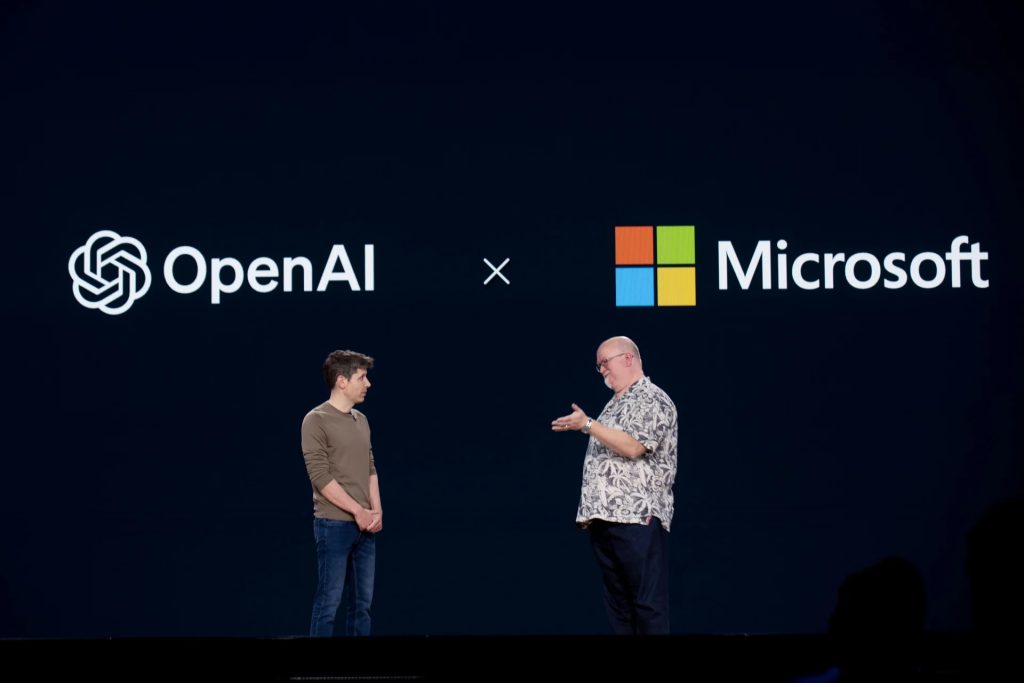
In contrast, OpenAI – led by Sam Altman – announced plans to allow verified adult users access to erotic content via ChatGPT, under its “treat adult users like adults” philosophy.
This divergence of approach is not a mere feature-difference; it reflects a deeper split about the role of AI in personal interaction, intimacy, and ethics.
Strategic & Ethical Implications
1. Philosophical rift: Microsoft is focusing on productivity-oriented AI (Copilot, enterprise tools) and explicitly rejecting what it calls “dangerous” AI that simulates consciousness or intimate relationships.
2. Trust and regulation: With increasing regulatory scrutiny over AI companion bots, age-verification, deep-fakes and emotional dependency on machines, Microsoft’s stance aligns with a cautious regulatory posture.
3. Partnership dynamics: This marks a visible divergence in the Microsoft-OpenAI relationship. While they remain partners, Microsoft appears to be calibrating its independence and defining its own AI ethics roadmap.
4. Market positioning: For Microsoft, avoiding adult-content AI may protect brand risk and enterprise credentials. For OpenAI, opening to adult mode may expand user base but increases ethical and regulatory exposure.
What It Means for the Wider AI Ecosystem
Content creators & platforms: As companies pick different ethical lines, platforms must adapt their moderation, age-verification, and permissible use-case policies accordingly. Product design & UX: Companies building AI companions must decide whether to integrate emotional/intimate interactions or limit themselves to productivity/utility domains. Regulatory & governance frameworks: The debate underlines the need for clear policy around adult-mode AI, user safety, emotional health, and content moderation. User expectation: As AI becomes more human-like, users will question what roles AI should play versus what should remain human-to-human.
Final Thoughts
Microsoft’s decision to refuse AI erotica services, juxtaposed with OpenAI’s willingness to allow it, is far more than a feature toggle. It’s a signal of a growing philosophical divide in the AI industry about how machines should engage with humans.
For anyone building AI experiences — including platforms like Hereco — this moment is a call to consciously define what kind of AI you build, for whom, under what ethics. Productivity-first or intimacy-enabled? The choice matters.