Understanding Open-Source AI Models: The Future of Transparent Intelligence
 October 23, 2025
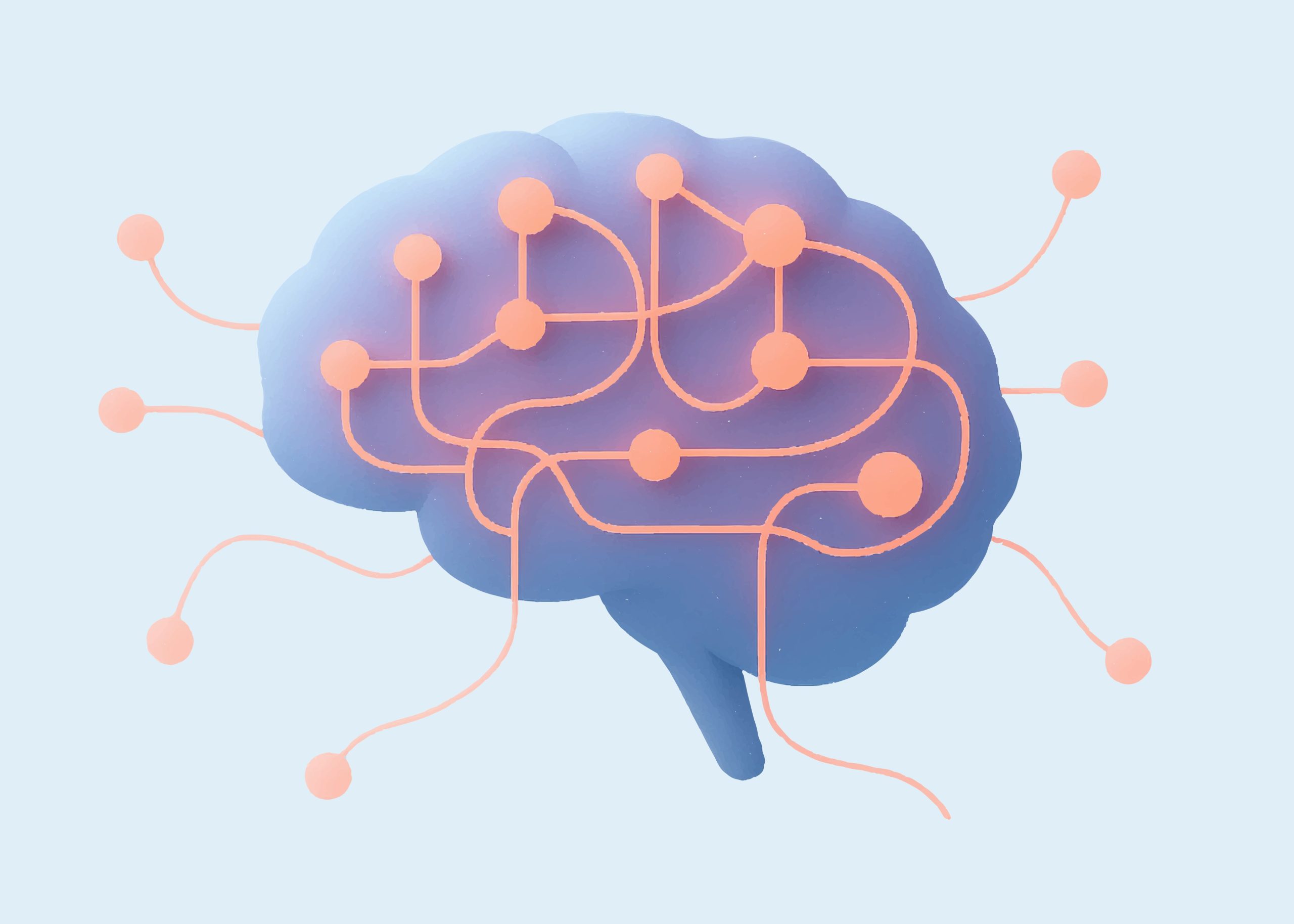
Artificial Intelligence has evolved faster than almost any other field in technology — and at the heart of this revolution lies a quiet but powerful movement: open-source AI.
In contrast to proprietary systems like OpenAI’s ChatGPT or Anthropic’s Claude, open-source models such as Meta’s LLaMA 3, OpenAI’s GPT OSS, Mistral, and Falcon are freely available for developers, researchers, and startups to explore, customize, and improve.
At Hereco, we believe in transparency and accessibility — and this is why the open-source AI movement matters so much.
What “Open-Source AI” Actually Means
When we say an AI model is “open source,” we mean its core architecture, training weights, or codebase are publicly accessible.
This allows:
- 🧩 Developers to build on top of it without licensing fees
- 🔍 Researchers to inspect how it works, improving ethics and safety
- ⚙️ Businesses to deploy it privately, ensuring data control
- 🌍 Communities to contribute improvements, extensions, and bug fixes
Essentially, open-source AI models bring the spirit of collaboration — the same spirit that built Linux, Python, and Android — into the world of artificial intelligence.
Major Players in the Open-Source AI Space
Here are some of the leading projects defining the ecosystem in 2025:
1️⃣ Meta LLaMA 3
Meta’s LLaMA 3 (Large Language Model Meta AI) is one of the most widely used open models today.
It’s powerful enough to rival ChatGPT-4 in reasoning and creativity — and yet, it’s free to use for research and development.
- Released under a permissive license (allowing both commercial and academic use)
- Available in multiple sizes (from 8B to 70B parameters)
- Supported by community fine-tunes like LLaMA 3.1 Chat, optimized for conversation and instruction following
Because of its balance between quality and accessibility, LLaMA 3 has become the “base model” for hundreds of startups and research projects.
2️⃣ GPT OSS (Open Source System)
GPT OSS is a collaborative community project designed to replicate GPT-class capabilities using transparent, open architectures.
Unlike proprietary GPT-4 or GPT-5 models, GPT OSS emphasizes:
- Publicly available training data documentation
- Customizable parameters for developers
- Local deployment (you can run it entirely on your own server)
At Hereco, we’ve even integrated GPT OSS into our own chatbot at hereco.xyz/chatbot, so users can experience a fast, lightweight, privacy-friendly AI chat experience.
3️⃣ Mistral 7B & Mixtral 8x22B
French startup Mistral AI has become a leader in compact, high-performance open models.
Their Mixtral 8x22B is a “Mixture of Experts” system that combines speed and precision — it only activates relevant parts of the model for each query, saving compute power while keeping accuracy high.
These models are widely used by developers who want near-GPT-4 performance without the licensing restrictions or costs.
4️⃣ Falcon Series
Developed by the Technology Innovation Institute (TII) in Abu Dhabi, Falcon 180B was once the largest open model in the world.
It set a precedent for transparent model training, showing that even state-level research groups could contribute to global AI innovation.
🏗️ Why Open-Source Models Matter
Open-source AI isn’t just about accessibility — it’s about trust and innovation.
1️⃣ Transparency Builds Trust
When the code and data are visible, it’s easier to identify bias, ensure fairness, and understand how models make decisions.
2️⃣ Freedom to Innovate
Developers can train or fine-tune these models for specialized applications — from medical research assistants to creative writing partners — without being locked into proprietary APIs.
3️⃣ Economic Accessibility
Small teams and startups can now experiment with world-class AI without paying high subscription fees or usage caps.
4️⃣ Data Privacy
With local deployment, companies can process sensitive data internally, instead of sending it to external AI servers.
🧮 Open Source vs Closed Source AI: Key Differences
| Aspect | Open-Source AI (LLaMA 3, GPT OSS, Mistral) | Closed-Source AI (ChatGPT, Claude, Gemini) |
|---|---|---|
| Code & Weights | Publicly available | Proprietary & encrypted |
| Customization | Fully customizable | Limited to API parameters |
| Privacy | Can be self-hosted | Data passes through provider |
| Cost | Free or low-cost | Subscription-based |
| Transparency | Full visibility | Limited insight into training |
| Performance | Rapidly catching up | Often slightly higher, but closed |
⚙️ The Challenges Ahead
Open models also face their own hurdles:
- Compute Costs — training even a 7B model costs millions of dollars in GPUs.
- Data Quality — publicly available data may contain bias or misinformation.
- Security & Misuse — open access can be abused for spam or disinformation if not regulated.
However, with better community governance, transparency, and safety alignment, open-source AI continues to mature fast.
🔮 The Future of Open AI Ecosystems
We’re witnessing the rise of a dual ecosystem:
- Proprietary giants pushing scale and reliability (ChatGPT, Claude, Gemini)
- Open communities pushing transparency and innovation (LLaMA, Mistral, GPT OSS)
Over time, these two will likely coexist — with open models driving experimentation and trust, while closed ones power enterprise-grade products.
For Hereco, and for independent creators everywhere, open models represent freedom — the freedom to learn, to build, and to innovate without limits.
The open-source AI movement is redefining what it means to innovate in the age of intelligence.
As models like LLaMA 3, Mistral, and GPT OSS continue to advance, they empower everyone — from developers to students — to participate in shaping the next generation of digital intelligence.
At Hereco, we’ll continue experimenting with these systems to make AI more accessible, transparent, and user-driven.
The future of AI isn’t just in closed labs — it’s in the open, where collaboration sparks the next big leap.